
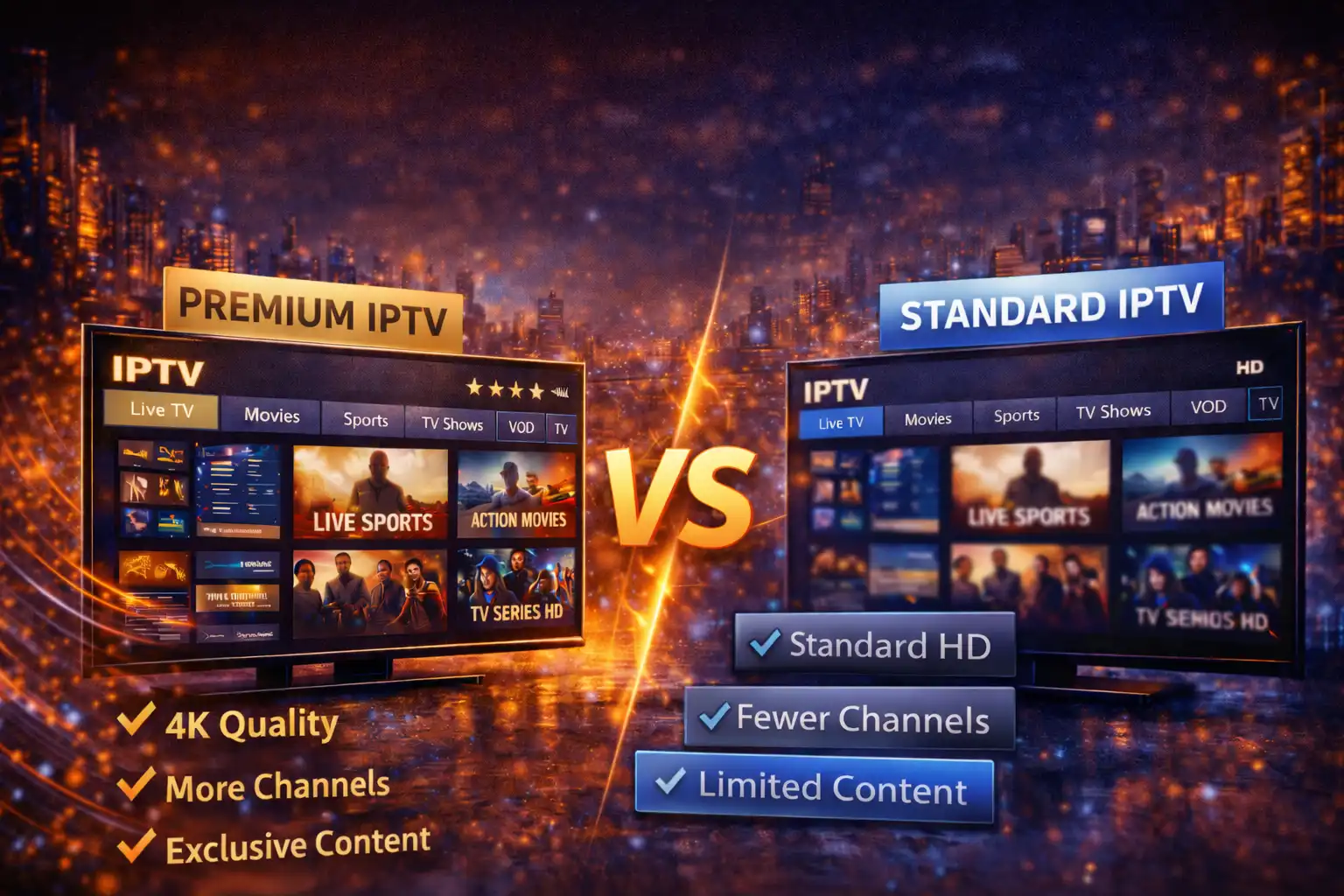
IPTV Premium vs Standard IPTV: A Professional Comparison of Performance and Value
Introduction
Internet Protocol Television has reshaped how audiences consume television content, replacing rigid broadcast schedules with flexible, internet-based streaming. As IPTV adoption continues to grow, viewers are increasingly faced with a key decision: choosing between standard IPTV services and IPTV premium solutions. While both models rely on similar underlying technology, the differences in performance, reliability, content management, and overall value are significant especially for users who demand a professional-grade viewing experience.
Standard IPTV services are often positioned as low-cost alternatives that provide access to live channels and basic on-demand libraries. They can be attractive to casual users, but they frequently come with compromises in stability, quality, and support. IPTV premium, on the other hand, represents a more mature and structured service tier. It is designed to meet higher expectations by prioritizing performance benchmarks, advanced content management, consistent uptime, and professional service standards.
This article offers a comprehensive, professional comparison of IPTV premium versus standard IPTV. Each section focuses on a specific aspect that differentiates these two service models, from raw performance metrics to long-term value for modern viewers. By examining these areas in detail, readers will gain a clear understanding of why IPTV premium is increasingly regarded as the preferred choice for users who value quality, reliability, and sustainability in their streaming experience.
Performance Benchmarks Defining IPTV Premium Versus Standard IPTV
Performance is the most immediate and noticeable difference between IPTV premium and standard IPTV services. While both deliver television content over the internet, the way that content is processed, distributed, and optimized sets IPTV premium apart. Professional evaluations of IPTV services rely on specific performance benchmarks that measure how well a platform performs under real-world conditions.
One of the primary benchmarks is stream stability. IPTV premium services are engineered to maintain smooth playback even during peak usage periods. This is achieved through advanced server infrastructure, intelligent load balancing, and adaptive bitrate streaming. Standard IPTV services, by contrast, often rely on limited server capacity, which can lead to buffering, freezing, or sudden quality drops when demand increases.
Latency is another critical performance factor. IPTV premium platforms are optimized to minimize delay between content source and viewer, which is especially important for live sports, news, and real-time events. Lower latency ensures that viewers receive content closer to real-time, enhancing engagement and reducing frustration. Standard IPTV services may exhibit noticeable delays due to less optimized routing and outdated streaming protocols.
Channel switching speed is also a key benchmark. IPTV premium services prioritize fast response times when users change channels, creating a seamless viewing experience similar to traditional television. Standard IPTV services often lag in this area, with slower channel loading times that disrupt the viewing flow.
Video quality consistency further highlights the performance gap. IPTV premium platforms support high-definition and ultra-high-definition streams with consistent bitrate management. This ensures clear visuals and stable playback across different devices and network conditions. Standard IPTV services may advertise similar resolutions, but they often struggle to maintain quality during extended viewing sessions.
From a professional standpoint, these performance benchmarks collectively define the superiority of IPTV premium. They reflect a deliberate investment in infrastructure and optimization that standard IPTV services typically lack.
IPTV Premium Content Management and On-Demand Capabilities
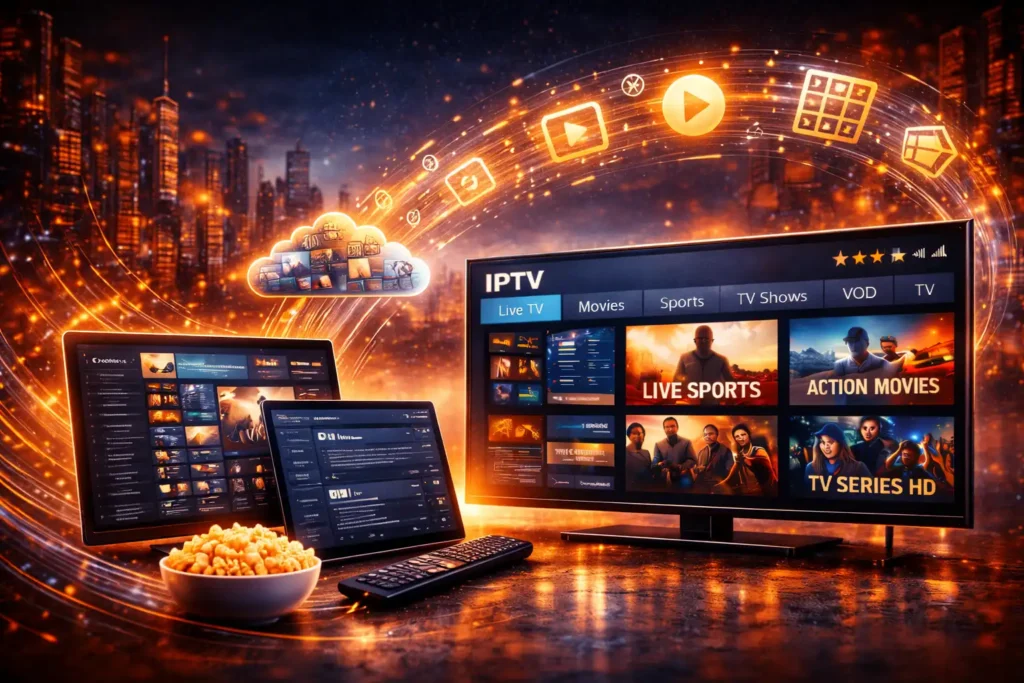
Content management is a defining element of IPTV premium services and a major area of differentiation from standard IPTV. While both models may offer live television and on-demand content, the depth, organization, and reliability of content delivery vary significantly.
IPTV premium platforms employ structured content management systems that ensure consistent availability of live channels and on-demand libraries. These systems are designed to handle large volumes of content while maintaining fast access and accurate categorization. Viewers benefit from well-organized channel guides, searchable libraries, and reliable playback of on-demand content.
On-demand capabilities are particularly important for modern viewers who expect flexibility. IPTV premium services typically offer extensive video-on-demand libraries that include movies, series, and catch-up TV. These libraries are regularly updated and optimized for fast loading and high-quality playback. Standard IPTV services may offer limited on-demand options, often with inconsistent availability or outdated content.
Another key aspect is content synchronization. IPTV premium platforms ensure that program guides, metadata, and playback links are synchronized across devices. This results in accurate program schedules, correct episode listings, and reliable playback. Standard IPTV services may suffer from mismatched guides or broken on-demand links, reducing usability.
Content redundancy also plays a role. IPTV premium providers maintain multiple content sources and backup streams to prevent interruptions. This redundancy ensures that if one source fails, another can take its place seamlessly. Standard IPTV services often rely on single sources, making them more vulnerable to outages or content loss.
From a professional perspective, IPTV premium content management reflects a commitment to consistency, organization, and user satisfaction. These capabilities transform IPTV from a basic streaming option into a comprehensive entertainment platform.
Reliability and Uptime Expectations in IPTV Premium Streaming
Reliability is one of the most important criteria used to evaluate IPTV services, and it is an area where IPTV premium clearly distinguishes itself from standard IPTV. Uptime, defined as the percentage of time a service is available and functional, is a key metric in this comparison.
IPTV premium services are designed to achieve high uptime levels, often exceeding industry benchmarks. This reliability is supported by robust server infrastructure, continuous monitoring, and proactive maintenance. IPTV premium providers invest in redundancy, ensuring that backup systems are ready to take over in the event of technical issues.
Standard IPTV services, in contrast, may experience frequent downtime due to limited infrastructure and reactive maintenance practices. These interruptions can be particularly disruptive during live events or peak viewing hours, undermining user trust and satisfaction.
Another aspect of reliability is consistency over time. IPTV premium services aim to deliver stable performance not just on a daily basis, but over months and years. This long-term reliability is essential for users who depend on IPTV as their primary television solution. Standard IPTV services may perform adequately in short bursts but struggle to maintain consistency.
Communication during outages also reflects reliability standards. IPTV premium providers typically inform users about maintenance schedules or unexpected issues, setting clear expectations and demonstrating accountability. Standard IPTV services often lack transparent communication, leaving users uncertain about service status.
From a professional viewpoint, reliability and uptime are non-negotiable elements of IPTV premium streaming. They represent the foundation of user confidence and long-term service value.
Support, Maintenance, and Service Levels in IPTV Premium Solutions
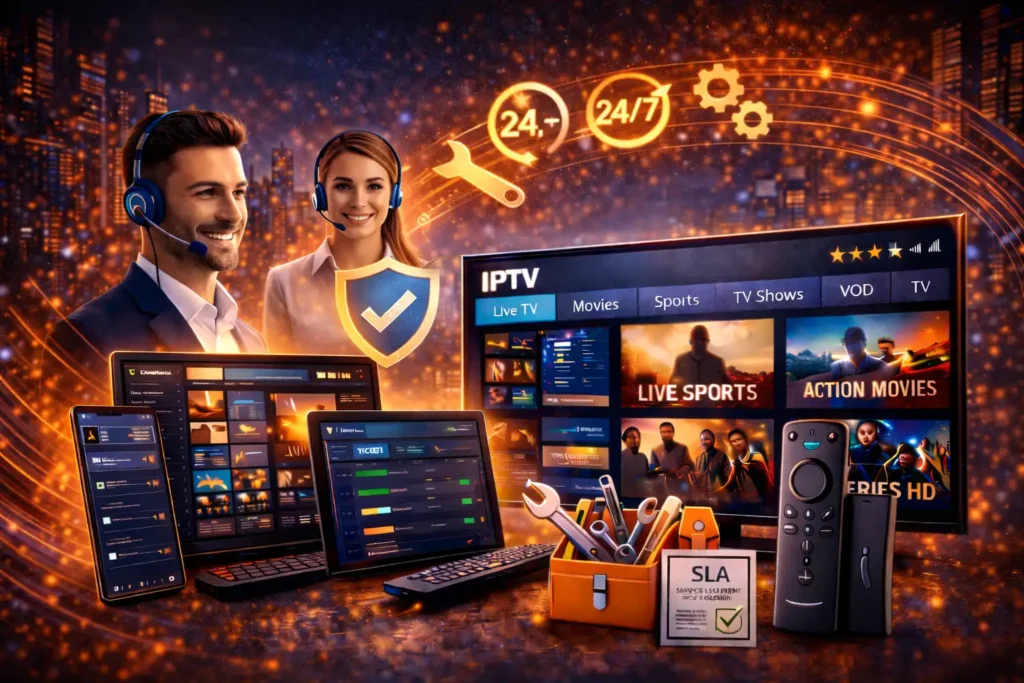
Support and maintenance are often overlooked when comparing IPTV services, yet they play a critical role in overall service quality. IPTV premium solutions are distinguished by structured support systems and proactive maintenance practices that ensure smooth operation and user satisfaction.
Professional IPTV premium providers offer dedicated customer support channels, including ticket systems, live chat, and detailed documentation. This support infrastructure allows users to resolve issues efficiently and receive guidance on setup, optimization, and troubleshooting. Standard IPTV services may provide limited or inconsistent support, leaving users to rely on trial and error.
Maintenance practices further differentiate IPTV premium from standard IPTV. Premium providers perform regular system updates, infrastructure upgrades, and performance optimizations. These activities are often scheduled during low-usage periods to minimize disruption. Standard IPTV services may delay maintenance or perform it reactively, increasing the likelihood of unexpected outages.
Service level expectations are also higher for IPTV premium. Providers commit to specific performance standards, such as uptime targets and response times. These commitments reflect a professional approach to service delivery. Standard IPTV services typically do not offer such assurances, making performance unpredictable.
Another important aspect is adaptability. IPTV premium providers monitor usage patterns and user feedback to refine their services continuously. This iterative approach ensures that platforms evolve in response to changing viewer needs. Standard IPTV services may remain static, falling behind as technology and expectations advance.
In professional evaluations, strong support and maintenance practices are clear indicators of IPTV premium quality. They demonstrate that the service is designed for sustained performance rather than short-term use.
Evaluating Overall Value Proposition of IPTV Premium for Modern Viewers
When assessing the overall value of IPTV premium versus standard IPTV, it is essential to look beyond initial cost and consider the complete viewing experience. Value in this context encompasses performance, reliability, content quality, support, and long-term satisfaction.
IPTV premium services often carry a higher price than standard IPTV, but this cost reflects the investment in infrastructure, content management, and service quality. For modern viewers who prioritize uninterrupted streaming, high-definition content, and responsive support, IPTV premium delivers a return on investment that standard IPTV struggles to match.
Flexibility is another component of value. IPTV premium services typically offer scalable plans, multi-device support, and customizable features that adapt to individual or household needs. Standard IPTV services may lack this flexibility, limiting their usefulness over time.
Long-term cost efficiency also favors IPTV premium. While standard IPTV may appear cheaper initially, frequent outages, poor performance, and lack of support can lead to frustration and additional costs associated with switching providers. IPTV premium’s reliability reduces these hidden costs and enhances overall satisfaction.
From a professional standpoint, IPTV-premium represents a holistic value proposition. It aligns with modern viewing habits, technological expectations, and the demand for dependable digital services.
Conclusion
The comparison between IPTV-premium and standard IPTV reveals a clear distinction in performance, reliability, and overall value. IPTV-premium is not merely an upgraded version of standard IPTV; it is a fundamentally different service model built on professional standards and long-term sustainability.
Through superior performance benchmarks, advanced content management, consistent uptime, robust support, and a strong value proposition, IPTV-premium meets the expectations of modern viewers who rely on streaming as their primary source of television content. Standard IPTV may serve as an entry-level option, but it often falls short in areas that matter most over time.
For users seeking a dependable, high-quality, and future-ready streaming experience, IPTV-premium stands out as the professional choice. By understanding these differences, viewers can make informed decisions that align with their entertainment needs and long-term expectations.